
Table Of Contents
We break down LA Metro rules, real numbers, brain science, and practical steps so parents can decide what is right for their family.
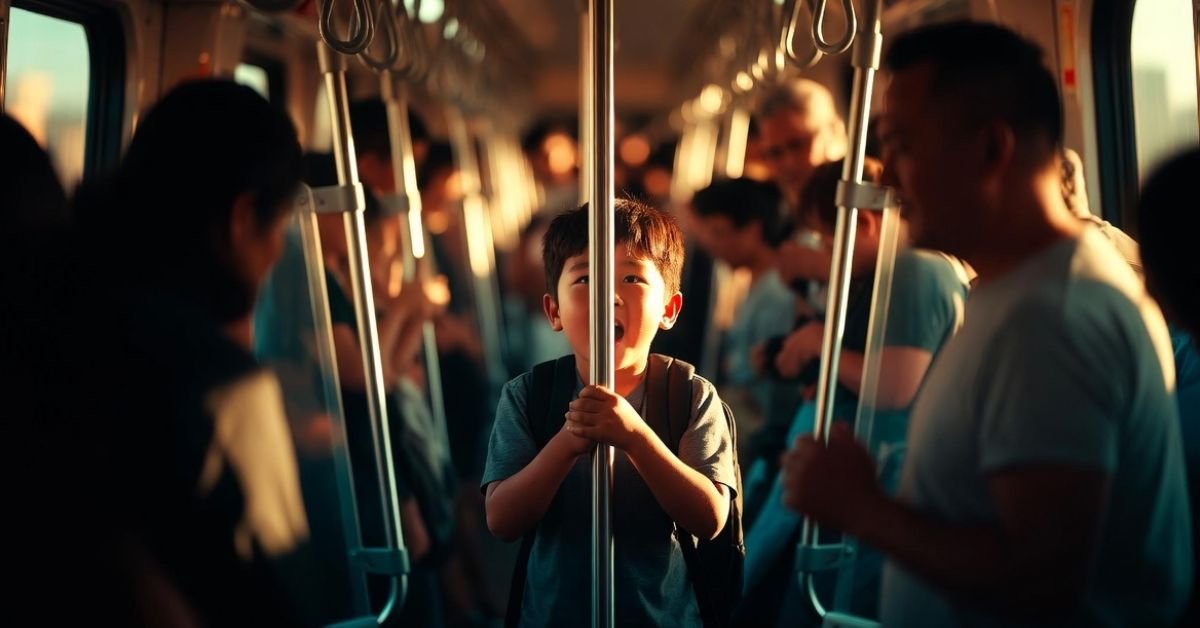
A seven-year-old.
A packed train.
Rush hour in Los Angeles.
No parent in sight.
When stories like this surface, the internet splits immediately.
Half the comments say brave parenting.
The other half says child endangerment.
But neither side usually stops to ask the question that actually matters: What do the facts say?
This article looks at the real numbers on LA Metro safety, what child development science tells us about a seven-year-old’s decision-making ability, what LA Metro’s own rules say about children riding alone, and what a responsible answer actually looks like for parents trying to make this call.
One Family’s Real Experience
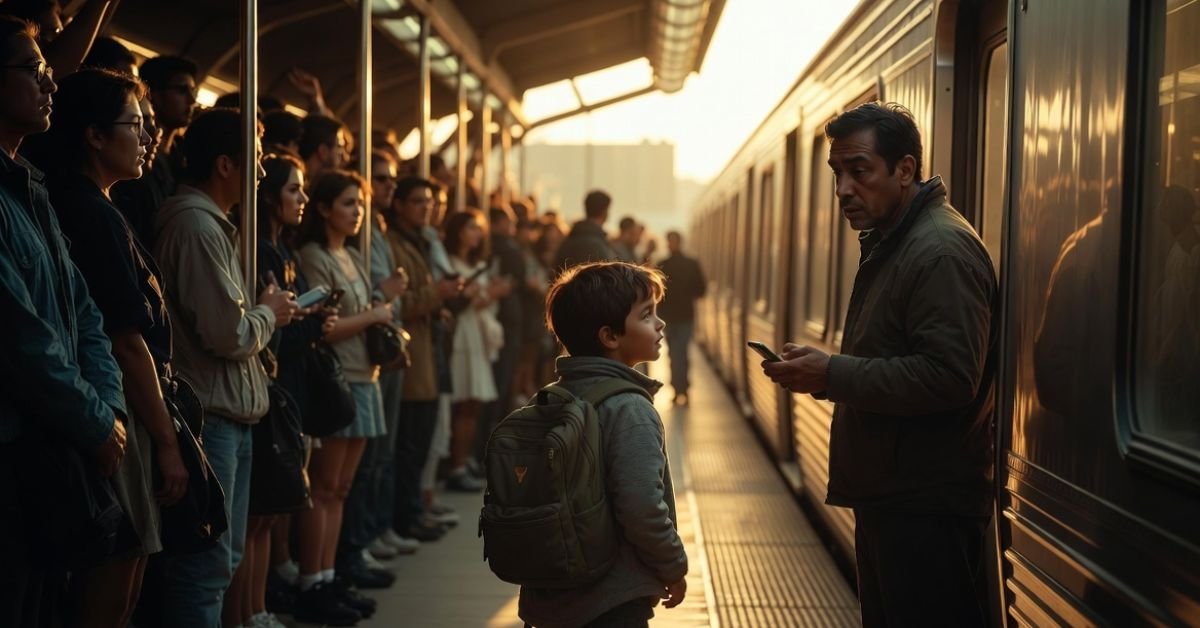
Last year, I faced this exact question with my own 7-year-old son.
Over breakfast, he asked, “Dad, can I ride the Metro to the next station alone?” My stomach dropped.
Rush hour in Los Angeles means crowded platforms, packed trains, and plenty of unknowns.
We had practiced together for months, taking short trips on the E Line during quieter hours, learning to read maps, tap the TAP card, and know exactly which stop to exit at.
So I said yes, but only after reviewing every safety step.
He boarded a standing-room-only train, texted when he got on and again when he got off ten minutes later:
“At the station. Walking to the park now.” No drama.
He came home proud and taller in his own words, saying the best part was “feeling like a big kid who can do things without help every second.”
I was glued to my phone the whole time, heart racing.
That anxiety is normal.
The experience taught us both something valuable, but it also showed us how much preparation matters.
This was not a reckless stunt.
It was a carefully planned step.
What LA Metro’s Rules Actually Say
Start with the policy, because most parents assume there is a strict rule here.
There is not.
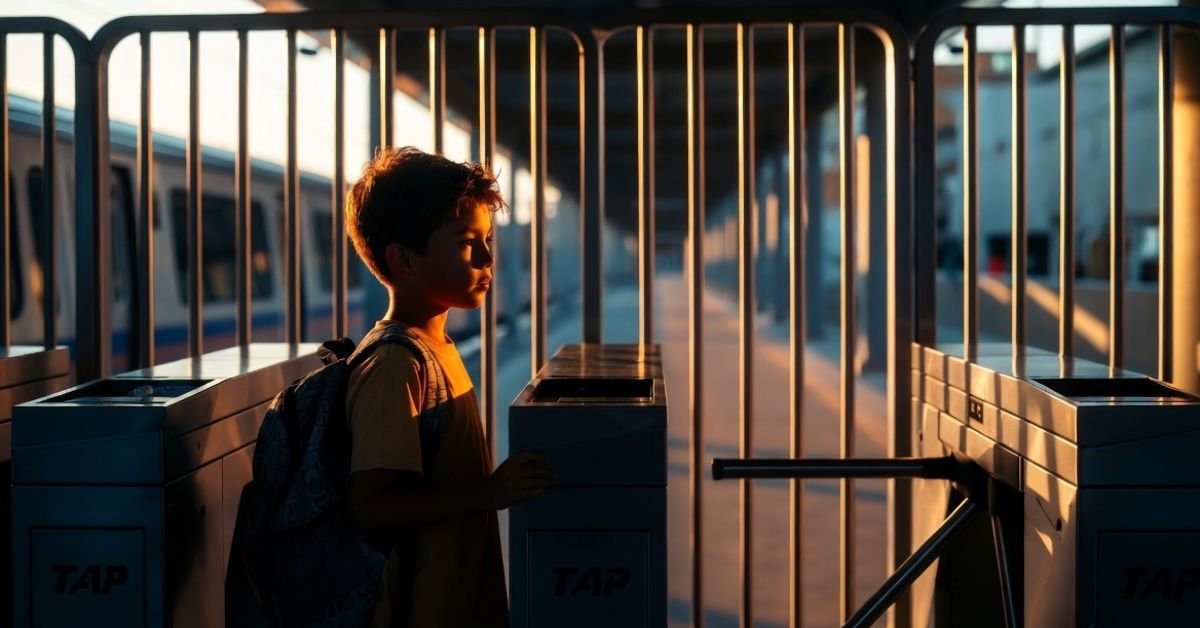
LA Metro does not set a minimum age for children riding unaccompanied.
The only age-related rule is fair: children under six ride free when accompanied by a fare-paying adult, and children six and above must pay the regular $1.75 fare.
That is it.
There is no policy requiring a child to be with an adult.
LA Metro does publish a safety guide for young riders.
It advises knowing your route in advance, riding with a friend when possible, staying alert, keeping one earbud out, and moving away from anyone who makes you uncomfortable.
The fact that this guide exists and is written for children tells you something important: LA Metro already knows that children ride this system alone.
They want them to do it safely.
The Safety Numbers, Honestly
Any parent thinking about this question deserves the full picture on safety, not a cherry-picked version.
LA Metro has had a documented safety problem since the COVID-19 pandemic.
Crimes on Metro properties jumped 54.7% between 2020 and 2023.
In the first three months of 2024 alone, there were 1,719 reported crimes across the system, up from 1,034 in the same period the year before, a rise of more than 65%.
Those numbers are real.
However, they are not the complete picture either.
By 2025, violent crime on Metro had fallen 6.7% compared to the previous year.
Metro reported that assaults were down 66% year-over-year and that violent crimes dropped 28% in spring 2025 compared to the prior year.
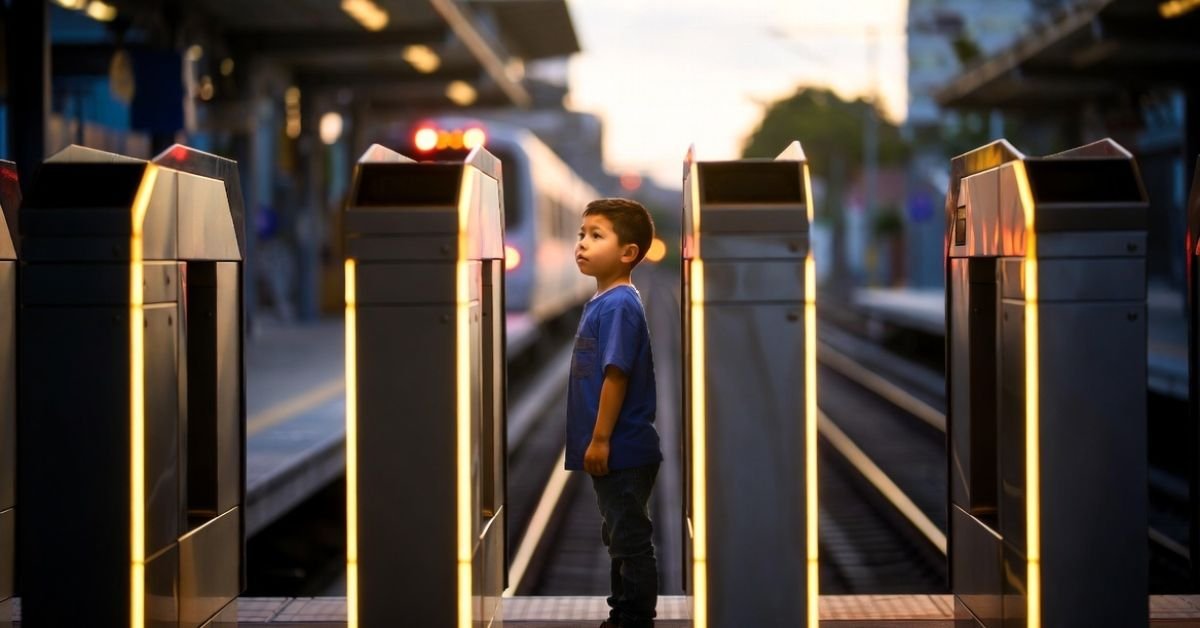
In March 2025, Metro installed reinforced, taller fare gates at 28 high-volume stations, and security incidents at those stations dropped by 69%.
An October 2025 rider survey of more than 9,000 people found an 87% customer satisfaction rate.
The system is getting safer.
It is not yet as safe as it was before 2020.
Moreover, it is not uniformly safe; the type of line, the specific station, and the time of day all produce very different risk profiles.
Here is the breakdown that matters most for parents:
| Factor | Lower Risk | Higher Risk |
|---|---|---|
| Line type | Rail (B, A, E Lines) | Bus routes |
| Time of day | Daytime, mid-morning | Late evening, night |
| Station | Busy, well-lit, staffed | Quiet, end-of-line, underground |
| Day of week | Weekdays, school hours | Weekends, late Friday/Saturday |
In 2024, buses experienced 10 incidents involving a deadly weapon compared to 6 on rail lines.
For a child riding alone, the rail network is statistically the safer option by a meaningful margin.
What A Seven Year Old’s Brain Can And Cannot Do
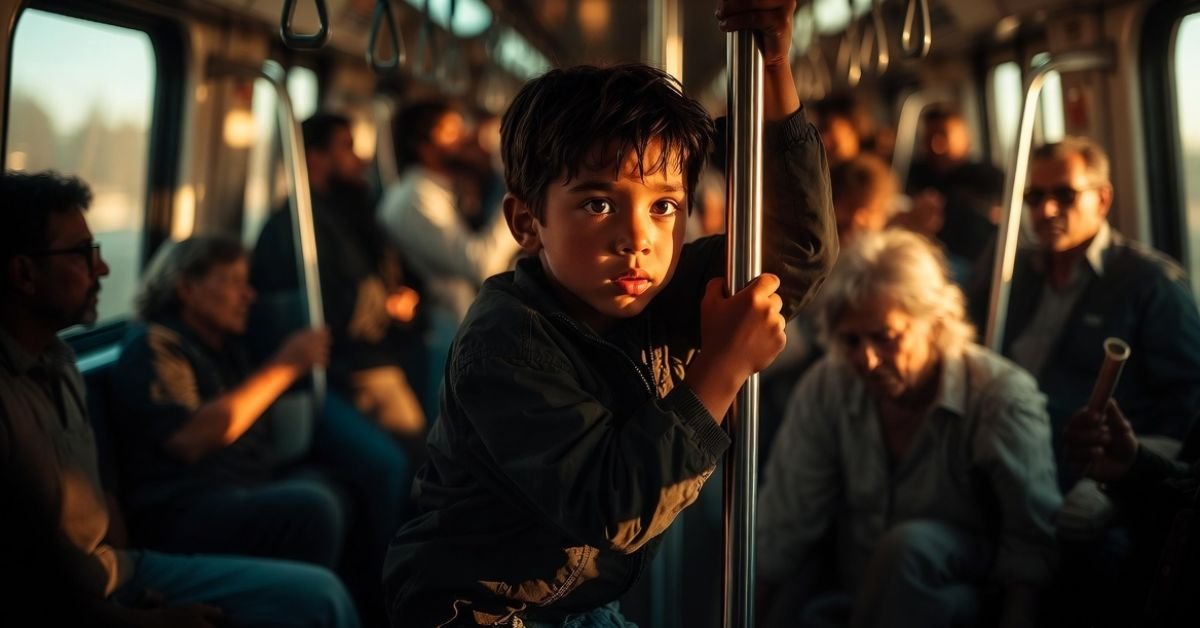
This is where the conversation usually gets vague.
People say things like “it depends on the child” and leave it there.
That is partly true, but science gives us a much clearer picture.
According to Jean Piaget’s framework of cognitive development, a seven-year-old is just entering the concrete operational stage (roughly ages seven to eleven).
At this stage, children begin developing logical reasoning and can follow a practiced plan.
In plain terms: a seven-year-old who has been taught a route can follow that route.
They can follow instructions.
They can execute a plan they have practiced many times.
What they are not yet reliably good at is handling the unexpected.
The part of the brain responsible for quick decisions, judgment, and risk assessment is still developing and will continue to mature into adulthood.
So the honest fact-based answer is this: A prepared seven-year-old can follow a known route on a safe, staffed rail line during daytime hours.
However, when something unexpected happens, a missed stop, a delay, or an uncomfortable stranger, a seven-year-old does not yet have the brain wiring to handle it the way an older child could.
That gap is not a character flaw.
It is neuroscience.
What “Prepared” Actually Means

Preparation is the most important part, and the one most often glossed over.
Real preparation for a seven-year-old riding alone looks like this:
- Route familiarity: The child has ridden the exact route from start to finish at least 3 times with an adult. They know the station names, the number of stops, and what the correct exit looks like.
- A clear emergency plan: They know exactly what to do if they miss their stop, whom to call, and that it is safe to approach a Transit Ambassador.
- A charged phone with contacts saved: Parents’ number plus one backup, plus simple instructions saved as a note.
- Practice handling small problems: The child has had chances to ask for help or solve minor issues in safe settings.
- A realistic match between the child and the route: A calm, street-smart child who has practiced a lot is different from one who has mostly ridden in cars.
These are the exact steps we followed with our son, no fancy tools required.
The Broader Parenting Argument
The debate about children and independence is not new.
In 2008, journalist Lenore Skenazy let her nine-year-old ride the New York City Subway alone and was called the “world’s worst mom.”
Her book Free-Range Kids argued that fear of rare dangers was stopping parents from raising capable, resilient children.
She had a point.
Stranger abductions are statistically extremely rare.
The real danger is raising kids who never learn to navigate the world on their own.
However, Skenazy was talking about a nine-year-old in New York, a very different system and culture from rush-hour Los Angeles in 2025–2026.
The free-range idea does not mean that every child, at every age, is ready for every situation.
It means age-appropriate independence, built gradually, produces better outcomes than constant supervision.
Fact
In Japan, six-year-olds routinely ride trains to school alone.
The rail network carries roughly 12 billion passengers per year, and schools teach transit skills as a basic life lesson.
Clear signage, station attendants everywhere, and a culture that looks out for kids make it normal, not reckless.
It shows that children riding transit alone is not inherently dangerous when the system and preparation are right.
So, Is Seven Too Young For LA Metro At Rush Hour?
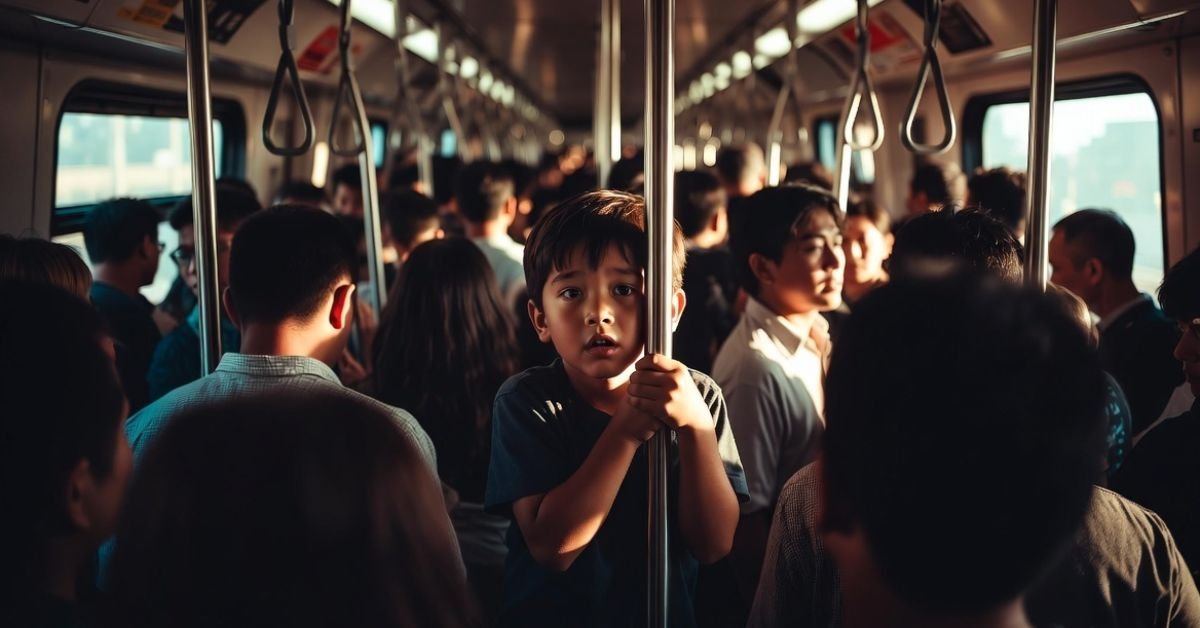
Based on the facts, here is a straight answer.
For most seven-year-olds, on most LA Metro routes, during rush hour, the honest answer is: probably yes, it is too young, but not for the reason most people assume.
It is not too young because seven-year-olds are fragile.
It is too young because rush hour creates exactly the conditions a seven-year-old’s developing brain handles worst: crowds, noise, unpredictability, delays, and the need for fast decisions under pressure.
A well-prepared seven-year-old on a quiet mid-morning rail trip with a familiar route and a parent one phone call away is a very different, and much more reasonable, step toward independence.
Rush hour is not that.
It is chaotic even for adults.
It is a poor environment for a child’s first real solo test.
The fact-based answer for parents is this: Start younger than you think, take smaller steps than you think, take safer routes than you think, and do it at quieter times than rush hour.
Build up gradually.
Let the child earn the harder rides by mastering the easier ones first.
That is not overprotection.
That is how real confidence and competence actually develop.
The Bottom Line For Parents

The question is not really “Is seven too young?” The real question is: “Is this child, on this route, at this time, with this level of preparation, ready for what could go wrong?”
If you can honestly answer yes to all of those, the route is a rail line rather than a bus, and it is not rush hour, then seven might be fine.
If you are unsure about any part of that, your uncertainty is the answer.
Start smaller.
The goal is independence, and the path to it should be thoughtful and safe.
Thanks for reading!
At THOUSIF Inc. – WORLDWIDE, we love sharing real conversations that help families make smart choices in busy cities.
If this got you thinking, explore our other articles on parenting, city living, and raising confident kids.
There is always something practical waiting for you.
Safe travels!
About Author