
Table Of Contents
Have you ever been mid-flight, heard the captain announce that the “lavatories” are now available, and thought, “Why not just say bathroom like a normal person?” It is one of those quirky little details that make air travel feel more formal than everyday life.
However, there is a real story behind it, and it is surprisingly logical once you dig in.
As someone who has spent years traveling the world (and yes, using plenty of airplane facilities), I have always found this fascinating.
Today, I am breaking it down for you in simple terms: why we use “lavatory,” why “bathroom” does not quite fit, and some fun extras that might change how you look at that tiny door next time you are flying.
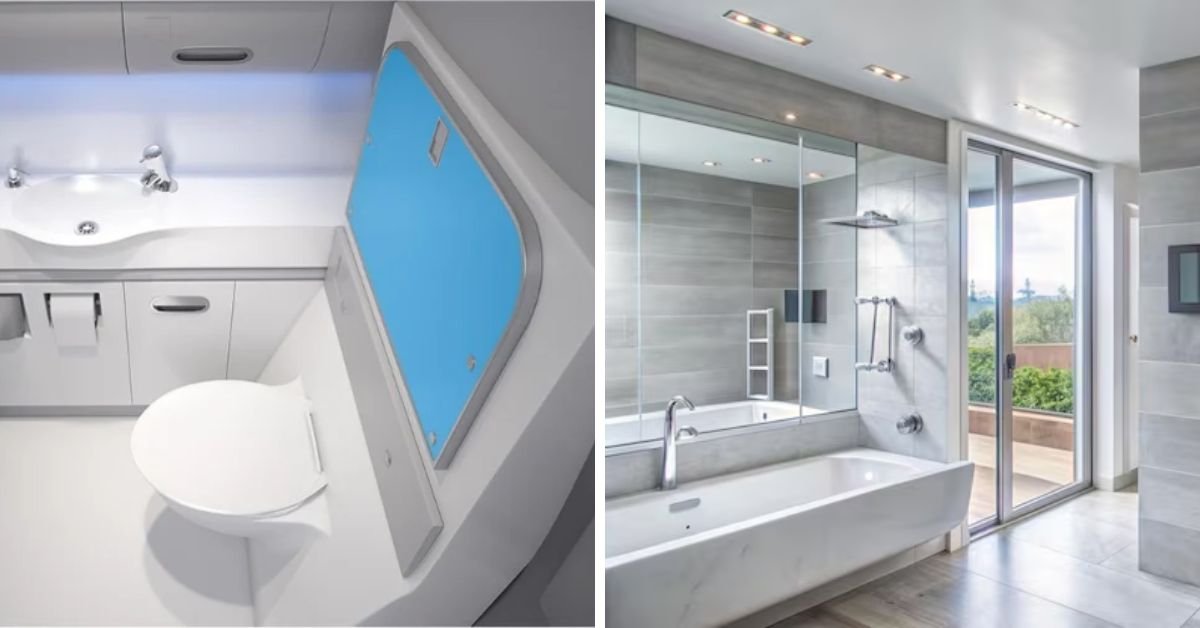
1. The Word “Bathroom” Implies A Bath – And There Is Not One!
Let us start with the obvious. In everyday language, a “bathroom” is the room in your home where you take a bath or shower.
It usually has a bathtub, shower stall, or at least the space for one.
Airplane facilities?
They are essentially a toilet and a small sink, perhaps a mirror and some soap, if you are lucky.
No tub, no shower, no relaxing soak at 35,000 feet.
Calling it a “bathroom” would be like calling a coffee shop a restaurant just because it serves drinks.
It is technically accurate in a pinch, but it does not tell the whole story.
2. “Lavatory” Comes From The Latin Word For “To Wash.”
The word “lavatory” traces back to Latin: lavare means “to wash.”
Over time, it evolved into a lavatorium, meaning a place for washing.
In older English, it referred to a room with a basin for washing hands and face.
That fits the airplane version perfectly; there is a sink for hand-washing, and that is about it.
The term has been around for centuries in transportation: ships, trains, and early aircraft all used “lavatory” because it is precise and polite.
When commercial aviation took off in the 1930s and 1940s, the industry continued the tradition.
3. Aviation Has Its Own Language – And “Lavatory” Is Official
Airlines, pilots, flight attendants, and regulators all use the same standard terms.
Open any aircraft manual, safety card, or FAA document, and you will see “lavatory” everywhere.
It is the professional word.
Saying “bathroom” or “restroom” might feel more casual, but it could confuse a global industry where English is the standard language for crews from dozens of countries.
“Lavatory” is neutral, clear, and universally understood, even if your first language is not English.
4. It Is Polite, Neutral, And Avoids Regional Slang
Air travel is international, and people use all sorts of words for the same thing: “toilet,” “loo,” “john,” “restroom,” “powder room,” or even “facilities.”
Some of those can sound too blunt or too casual in a professional setting.
“Lavatory” is a gentle, slightly formal euphemism that maintains dignity.
It is the same reason we say “restroom” in public places instead of “toilet room”; we like to soften the reality of what goes on in there!
5. Fun Facts And History You Probably Did Not Know
Here are some interesting tidbits that make the lavatory even more intriguing:
- Early Days Were Rough: Before the 1930s, some planes had no facilities at all. Passengers used buckets, and turbulence could make things messy. The first proper lavatories appeared in the 1930s, featuring removable toilet bowls, and flush systems followed later.
- Vacuum Toilets Rule: Most modern planes use vacuum flush systems (patented in 1975). They are lighter, use way less water, and create that famous “whoosh” sound. Waste is sent to a sealed tank, with no mid-flight dumping!
- Ashtrays Are Still Required: Although smoking has been banned on flights for decades, the FAA still mandates the presence of an ashtray in every lavatory door. Why? In case someone illegally lights up, they have a safe place to stub it out.
- They Are Getting Smaller: Newer planes squeeze in more seats, so lavatories are often just 24 inches wide in economy, about the width of a dishwasher. Luxury ones on wide-body jets are much roomier.
- No Legal Requirement: Airlines are not required by law to have lavatories on every flight. Some short-haul planes skip them entirely.
Lavatory vs. Bathroom vs. Restroom
| Term | Meaning | Use | Fits? |
|---|---|---|---|
| Lavatory | Latin “lavare” = to wash | Aviation, trains, ships | Perfect—focuses on washing, not bathing |
| Bathroom | Room with a bath/shower | Homes, hotels | Doesn’t fit—no bath or shower |
| Restroom | Place to rest (euphemism) | Public places in the US | Close, but less common in aviation |
| Toilet | Direct word for the fixture | Many countries | Too blunt for polite announcements |
The Bottom Line
Next time you shuffle down the aisle and see that “Lavatory” sign, you will know it is not just airline fancy talk.
It is a precise, historical word that makes sense for a space that’s all about washing up and handling necessities, without any actual bathing.
Air travel is full of these little curiosities that make the experience more interesting once you understand them, whether you are a frequent flyer or someone who only travels once a year.
Knowing the why behind the words adds a small quantity of fun to the journey.
Thanks for reading!
If you enjoyed this, check out more travel insights and tips on the THOUSIF Inc. – WORLDWIDE blog.
We have got articles on everything from packing hacks to the best airport lounges.
Safe travels, and see you in the skies!
Author