
Table Of Contents
At THOUSIF Inc. – WORLDWIDE, we are passionate about helping families live healthier, happier lives.
Yoga has been a big part of that mission for us because it is one of the few activities that truly benefits both body and mind, especially when you start young.
The word “yoga” comes from the Sanskrit root “yuj,” meaning “to unite” or “to join.”
It is all about bringing the body, breath, and mind into harmony.
Regular practice can reduce stress, support a healthy weight, strengthen bones, ease anxiety, and even lower the risk of heart problems later in life.
When children practise yoga, the benefits go even deeper.
They gain better flexibility, sharper hand-eye coordination, stronger focus, longer attention spans, and a surprising boost in creative thinking. Starting early builds habits that can last a lifetime.
With roots stretching all the way back to the Vedic period, yoga has evolved into a global practice loved by millions, for good reason.
It is gentle, restorative, and truly suitable for every age.
This International Day of Yoga, we have chosen four beginner-friendly poses that children love and that deliver real results.
They are playful, simple to learn, and need no special equipment, just a little space and a smile.
1. Downward Dog Pose

You might already catch your child doing something like this while playing on the floor, it is that natural!
How to do it:
- Start on hands and knees.
- Spread your fingers wide, tuck your toes under, and lift your hips toward the ceiling.
- Straighten your legs as much as feels comfortable (slightly bent knees are perfectly fine).
- Look toward your toes and hold for a few gentle breaths.
- Slowly lower your knees back to the floor to rest.
Why kids love it and why it helps:
- Sends extra blood flow to the brain, improving alertness and thinking.
- Releases tension and lowers stress almost instantly.
- Re-energises the whole body, perfect after sitting at a desk or screen all day.
2. Triangle Pose
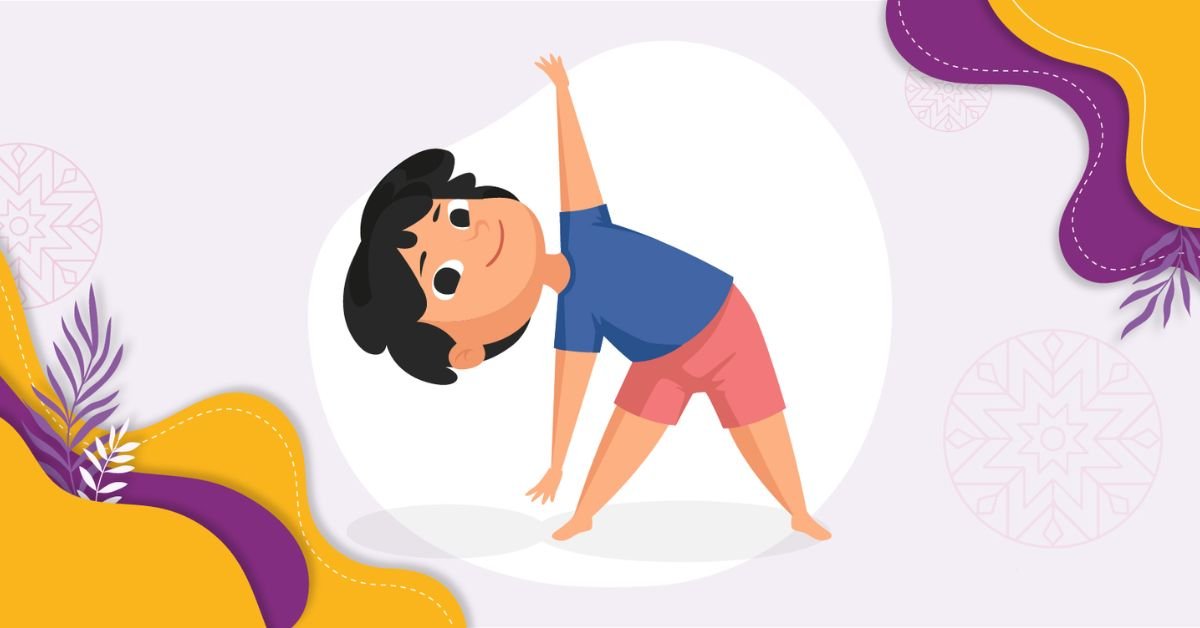
This one feels like a playful stretch or even a little dance move; kids usually giggle their way through it.
How to do it:
- Stand tall with feet wider than shoulder-width apart (about three feet).
- Turn your right foot out 90 degrees and your left foot slightly inward.
- Reach both arms out to the sides at shoulder height.
- Bend at the waist toward the right, sliding your right hand down toward your right ankle or shin.
- Reach your left arm straight up toward the sky and look up at your left hand.
- Hold for 15–20 seconds, breathing steadily.
- Come back up slowly and repeat on the left side.
Why Is It great For Growing Bodies?
- Supports healthy digestion (great for little tummies).
- Increases overall flexibility, especially in the sides and hips.
- Strengthens legs and ankles, building stability for sports and play.
3. Tree Pose
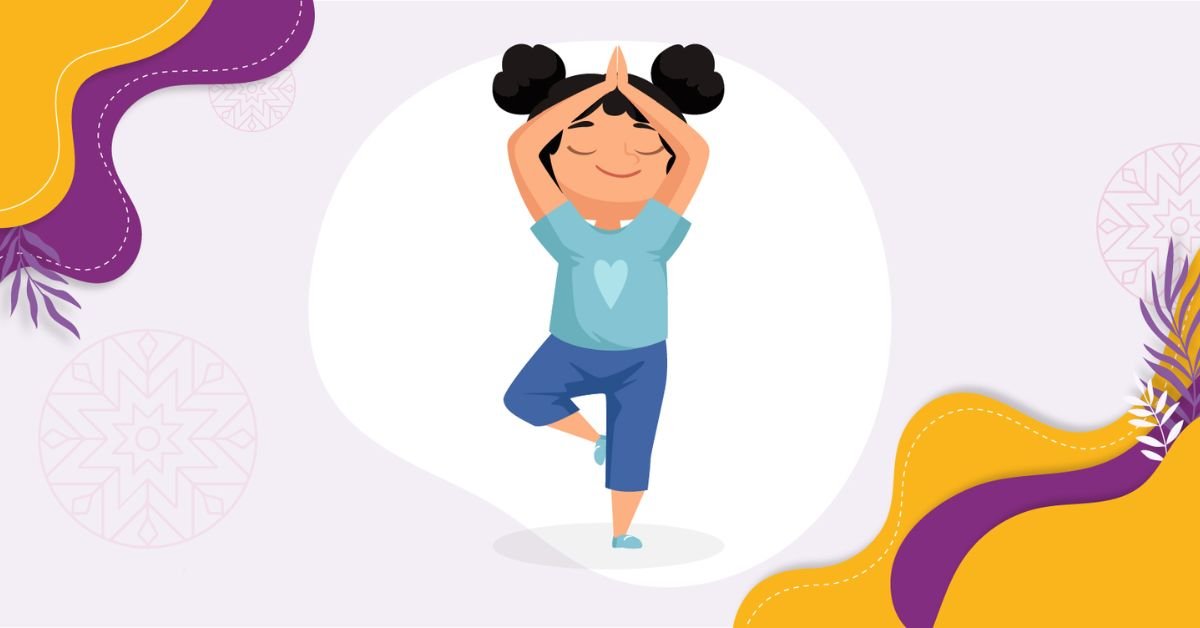
Wobbly at first? Totally normal, and part of the fun! Kids love pretending they are tall, strong trees swaying in the wind.
How to do it:
- Stand straight and tall.
- Shift your weight onto your left foot.
- Place the sole of your right foot on the inside of your left calf or thigh (never on the knee).
- Bring your hands together in front of your chest or raise them overhead like branches.
- Find a spot in front of you to gaze at—this helps balance.
- Hold for 15–20 seconds, then switch sides.
Why it is a favourite:
- Sharpens concentration and focus.
- Trains’ balance and coordination are beautiful.
- Strengthens the back and core muscles that support good posture.
4. Bee Breathing (Bhramari Pranayama)
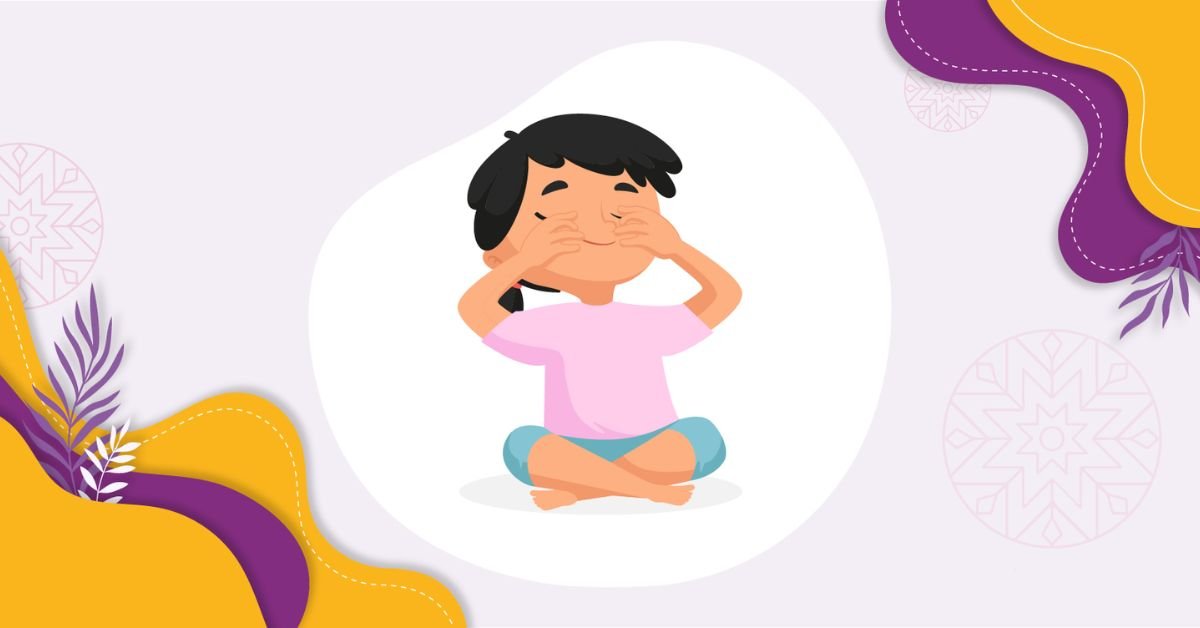
Sometimes the hardest part is getting kids to sit still. This breathing exercise turns quiet time into a game; they get to make a buzzing sound!
How to do it:
- Sit cross-legged comfortably and close your eyes.
- Take a slow, deep breath in through the nose.
- Gently close your ears with your thumbs and rest your other fingers lightly over your eyes and cheeks.
- As you exhale slowly, make a soft humming “mmmm” sound, like a buzzing bee.
- Repeat 5–10 times.
Why is it pure magic for young minds:
- Calms racing thoughts and soothes the nervous system.
- Enhances memory and learning ability.
- Offers a gentle tool for managing worry or excitement.
These four poses make a wonderful mini-sequence you can do together in 10–15 minutes.
Start with one or two and gradually add the rest as your child gets comfortable.
Always encourage listening to their body.
If something does not feel right, ease out gently.
Practising alongside your child turns yoga into precious bonding time.
You will both feel the difference: calmer minds, stronger bodies, and brighter moods.
This International Day of Yoga, roll out a mat (or just use the living-room floor) and give these poses a try.
We would love to hear from you.
Which one did your child enjoy most? Drop a comment below and let us know!
For more family wellness tips, parenting ideas, and healthy living inspiration, explore the rest of our blog at THOUSIF Inc. – WORLDWIDE.
Author